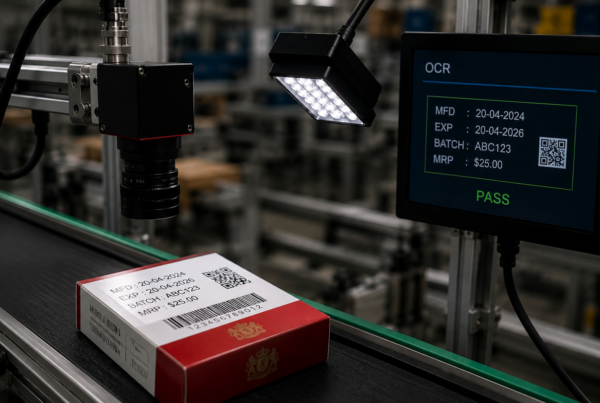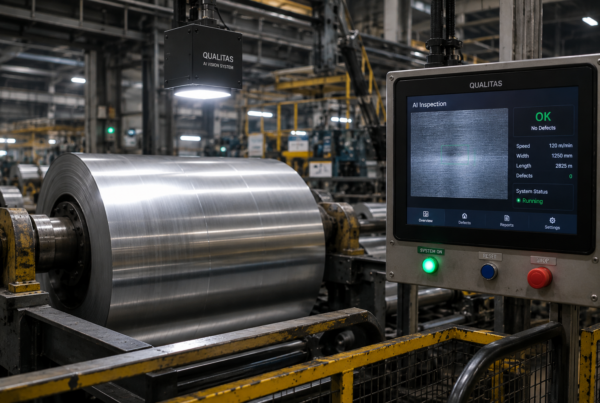
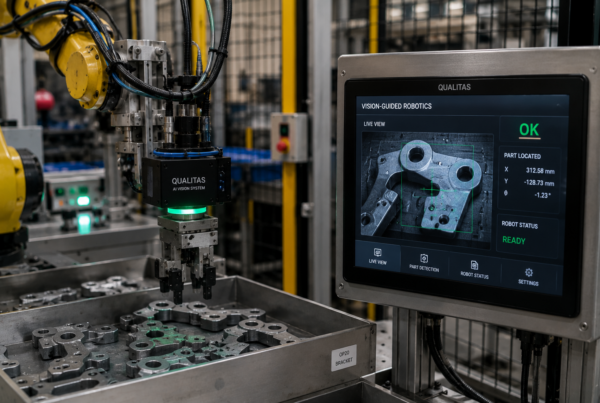
A robot without vision knows exactly one thing: where it was told to go. It moves blindly through pre-programmed coordinates. Vision changes everything about how robots interact with parts — letting them find, identify, and handle objects that are not in a fixed position.
From blind motion to guided action
Fixed automation assumes the part is always in the same place. Reality is messier — parts arrive at angles, in bins, or on moving conveyors. Vision guidance locates each part in real time and tells the robot exactly where and how to pick it.
2D and 3D guidance
2D vision handles flat, well-presented parts: position and rotation on a plane. 3D vision adds height and pose, enabling bin picking and the handling of complex geometries where parts overlap or stack.
Calibration is everything
The magic is in synchronizing the camera and robot coordinate systems. Once calibrated, what the camera sees translates directly into accurate, repeatable robot motion — down to sub-millimetre precision.
Key takeaways
- Vision lets robots handle parts in any position
- 3D guidance unlocks bin picking
- Calibration ties vision to repeatable motion