What needed solving
Laboratory testing at volume depends on each sample remaining linked to the right packet. Repeated manual entry of the date, long packet code and barcode created a traceability risk.
Cellophane wrapping caused glare across the laser-printed fields, while glossy packs, more than 200 brands and look-alike characters such as B/8, G/6 and O/0 made direct reading difficult.
How Qualitas solved it
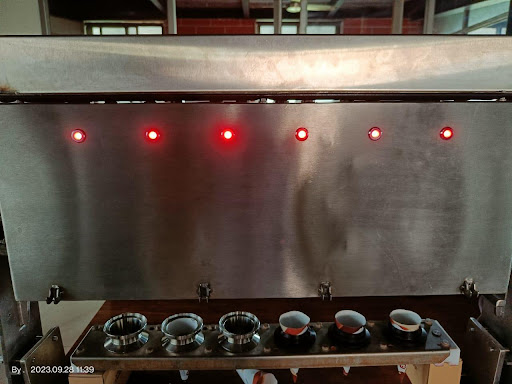
One 5 MP Basler camera, a dedicated barcode reader, controlled illumination, optical filtering, deep-learning OCR, a custom operator interface and LIMS integration combine the data-capture tasks at one tabletop station.
What the station reads
The camera reads the manufacturing date and 14-digit packet code. A dedicated barcode reader captures the side-face barcode. The combined result becomes part of the LIMS sample record.
A practical response to glare and variation
Controlled illumination, filtering and glare-suppression imaging make the laser-printed field usable for OCR despite reflections from the cellophane wrap. The configuration was designed for glossy packs, diverse print layouts and easily confused characters.
Planning a similar traceability station
A useful feasibility review starts with representative packs, every field to be captured, packaging variation and the LIMS or quality system that must receive the result.
Share representative samples, the printed and coded fields to capture, packaging variation and the LIMS or quality system that needs the result. We can assess the camera view, illumination, reading logic, barcode capture and data interface.
Request project details